
Marshall County Parole and Probation Differences
Oklahoma divides supervision work among agencies. The Oklahoma Pardon and Parole Board, often called PPB, considers parole matters and publishes its actions. The Oklahoma Department of Corrections, or ODOC, supervises people in the community through Probation and Parole Services. A Marshall County court can impose probation, while parole involves release after part of a prison sentence. Both can carry rules, reporting duties, and an end date. A person on either status is outside secure prison custody, but has not necessarily reached discharge.
The source that answers one question may not answer another. A PPB result can show what the Board did. An ODOC status is more useful for present supervision. A Marshall County District Court docket may show that probation was ordered, changed, or revoked. The county jail record can show when a local custody event ended, yet it does not establish that state supervision ended. These records should be read together when the dates or terms conflict.
| Point | Parole | Probation |
|---|---|---|
| How it begins | Release from a prison term under supervision | A sentence ordered by the court for community supervision |
| Decision record | PPB docket and result, followed by ODOC action | Marshall County court judgment and later docket entries |
| Current status | ODOC community-supervision record and assigned instructions | ODOC record, court record, and assigned instructions |
| How it ends | Discharge after the parole term is completed or otherwise closed | Completion, discharge, court action, or revocation |
The terms have narrow meanings. They should not be used as general labels for anyone who left the Marshall County Jail.
- Parole
- Conditional community release during a prison sentence.
- Probation
- Court-ordered supervision in the community rather than confinement for that term.
- Discharge
- The formal end of custody or supervision, not merely release from a building.
- Absconder
- A person whom the agency lists as no longer reporting as required.
Verify Marshall County Post-Release Supervision
Begin with the official OK Offender search. It covers people who entered ODOC custody or community supervision, not everyone booked at the Marshall County Jail. Search by DOC number when known. Otherwise, use full name and date of birth, then compare more than one identifier. A community status can support that the person is outside an ODOC prison. It does not prove the sentence has discharged. The database is abbreviated, and ODOC does not treat it as a full account of sentence details.
Use this sequence to separate supervision from a simple county release:
- Search OK Offender by DOC number or complete identifying details. Read status and location together.
- If probation or parole appears, note the exact wording. Do not convert a community status into a claim of discharge.
- Check the Marshall County court docket for the judgment, probation order, revocation event, or later case action.
- For parole, compare the PPB docket with its matching result sheet. A scheduled matter alone proves no release.
- Use the person's Certificate of Release or current ODOC confirmation to identify the reporting office and resolve an unclear status.
A local jail release can end without any ODOC entry. Bond, completion of a county sentence, dismissal, or transfer to a non-ODOC authority may leave no state supervision record. The Marshall County released-inmate search and release-record path explains how to request the sheriff record for that local event. If the person instead entered ODOC custody, state records are the better path.
Note: A community-supervision label confirms neither the exact day of physical release nor the final discharge date without supporting agency records.
Marshall County Supervision Office Unclear
Marshall County has a specific directory problem. The current ODOC Probation and Parole Services directory does not plainly assign Marshall County to an office in its visible office table. The Durant row names Bryan County. The Ardmore row names Carter and Love Counties. Marshall also appears in a separate list of inactive community-sentencing counties. That separate label concerns community sentencing and does not show that ordinary parole or probation supervision has stopped.
Do not guess Durant or Ardmore from distance alone. ODOC sentence-administration policy says a person leaving confinement for parole, unrevoked probation, a suspended split sentence, or post-imprisonment supervision receives a Certificate of Release and reporting instructions. Those instructions direct the person to the appropriate office near the approved home address. The person's own release papers, officer instructions, or fresh ODOC confirmation are therefore safer than a county-to-office assumption.
The ODOC Sentence Administration policy also identifies a pre-release plan and consolidated record material that move with a supervised release. These are state supervision documents, not standard Marshall County bond-release forms.
Use the statewide office directory and the assigned reporting instructions.
Confirm the office from the individual record or Certificate of Release.
Marshall County is not plainly mapped in the visible office table.
The official ODOC office page shows the ambiguity directly. Review the current P&P office table at its source before making contact.
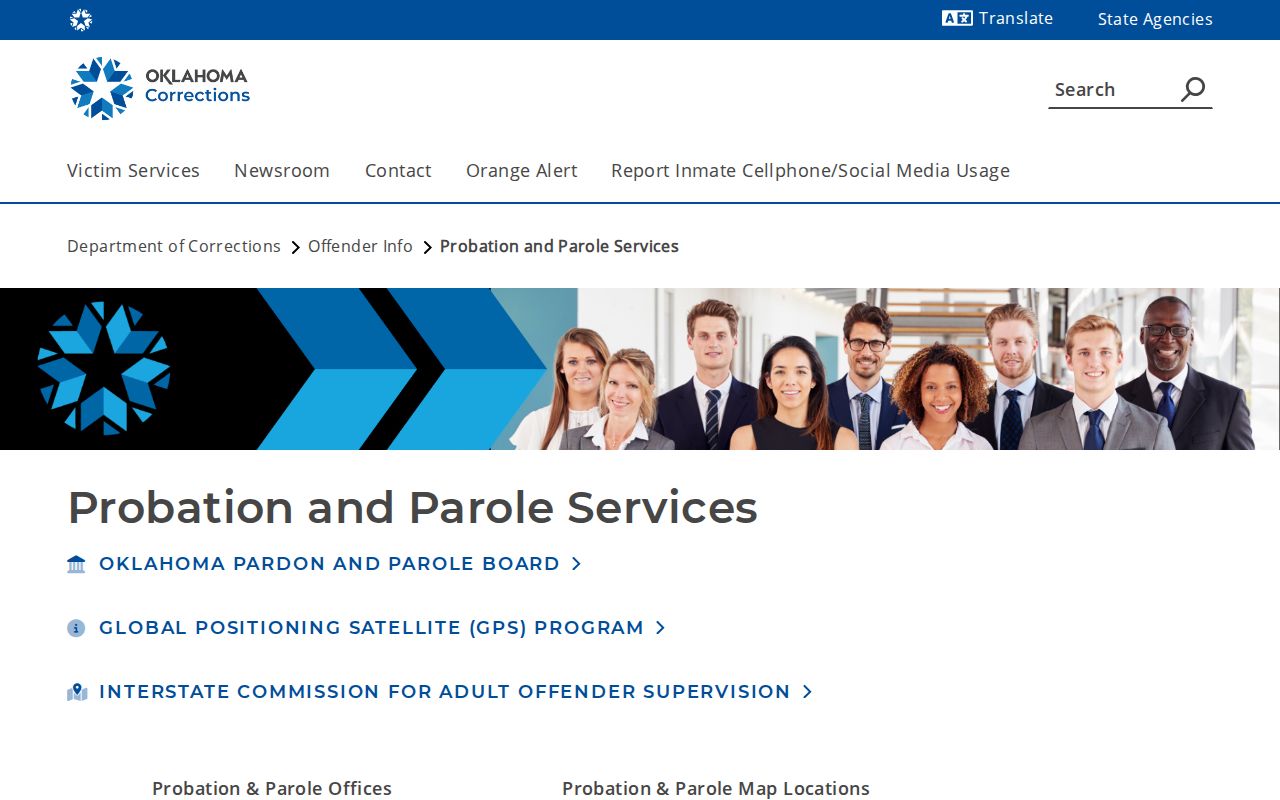
The table is useful for current office contacts, but the lack of a plain Marshall assignment makes individual reporting papers the key local source.
Marshall County Parole Decision Records
PPB publishes monthly dockets and matching result sheets. The combined hub includes parole, administrative parole, Stage One commutation, and SIR matters. It is a calendar and decision archive, not a live custody roster. Search by DOC number when possible, identify the correct month and docket category, then open the result for the same proceeding. The result's exact term matters because different Board actions have different legal effects.
A listed hearing means the matter was scheduled. A favorable result still does not prove the person walked out that day. Conditions, later action, or release processing may remain. A stronger chain combines the PPB result with a later ODOC community status, Certificate of Release, or agency confirmation. For an older or missing decision, PPB accepts an open-records request for Board material.
4345 N. Lincoln Blvd., Suite 1082
Oklahoma City, OK 73105
405-521-6600
Fax: 405-602-6437
The Board's monthly dockets and results hub displays the publication pattern used to trace a named parole matter.
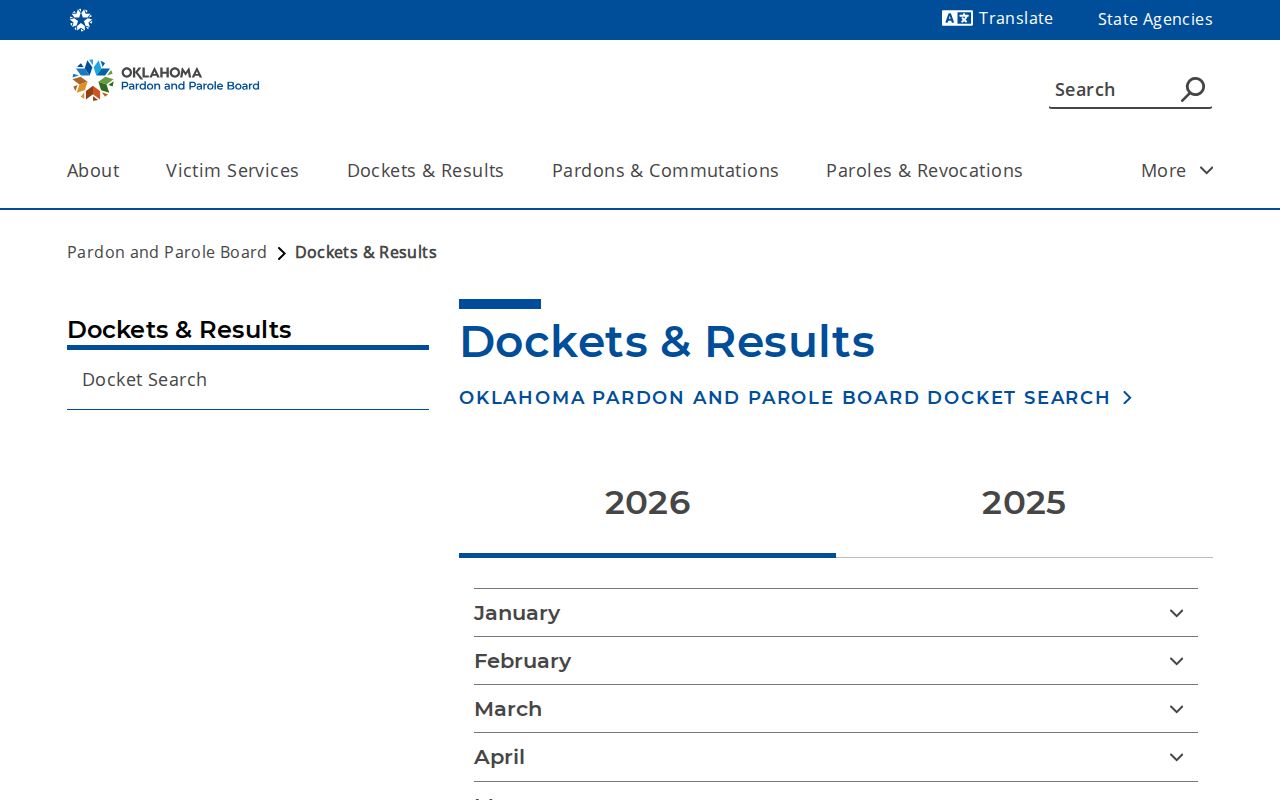
Match the month, document type, and result before drawing any conclusion about a Marshall County person's supervision or release.
Note: PPB holds Board decisions, ODOC holds offender and supervision records, and the county court clerk holds the conviction case.
Marshall County Parole Violations and Absconders
Supervision conditions are the rules a person must follow while on parole or probation. The exact terms come from the court order, release papers, and officer instructions. They can include reporting and other case-specific duties, but a public summary should not be treated as the person's full order. A violation allegation can lead to added review, a warrant, revocation proceedings, or a return to custody. It does not erase the original sentence or establish the final outcome by itself.
If the question is whether ODOC lists the person as having absconded, use the official OK Offender fugitive search. An absconder is someone the agency lists as no longer reporting as required. Confirm identity with DOC number and personal details. Then look for later court or agency action because a public status may lag. A Marshall County warrant or court docket can add context, but neither substitutes for the supervising agency's current case status.
VINELink serves a different role. It can provide custody-change notice when the reporting agency supplies the event, but it is not a permanent supervision history. A missing VINE result does not resolve parole, probation, or absconder status. Federal supervision is also separate. A federal case belongs with U.S. Probation and federal court records, not Oklahoma PPB.
Marshall County Supervision Discharge Records
Release and discharge are not synonyms. Release can mean leaving a jail or prison while parole, probation, or another legal duty continues. Discharge is the formal end of the relevant custody or supervision term. For a Marshall County person, an ODOC status that says parole or probation is evidence of ongoing community supervision. A discharge indication is stronger evidence that state supervision ended, but an abbreviated public entry should still be reconciled with ODOC documents when the precise date or scope matters.
The record trail depends on the sentence. A Marshall County court docket can show completion, revocation, or another order in a probation case. ODOC maintains its own state custody and supervision records. PPB records explain Board action, not every later administrative step. Under the Oklahoma Open Records Act, public records are generally available unless another law makes them confidential. A narrow request should identify the person, DOC or case number, relevant date range, and the exact discharge or supervision document sought.
Once supervision ends, old docket and status records may still reflect earlier events. Conversely, a missing search result does not prove that no supervision existed. Name variation, record limits, or a sealed case can affect visibility. The most reliable conclusion uses the creating agency's record and the exact legal term it uses.
Note: Ask for the discharge record itself when the end of supervision matters; release from a building answers a different question.